Why an email list for small business matters
An email list gives you direct access to customers without relying on platforms that change rules. It is the most cost-effective channel for repeat sales and customer retention.
Email lists let you control timing, messaging, and segmentation so you can send offers, news, and helpful content that drives revenue.
Get started: Essentials for an email list for small business

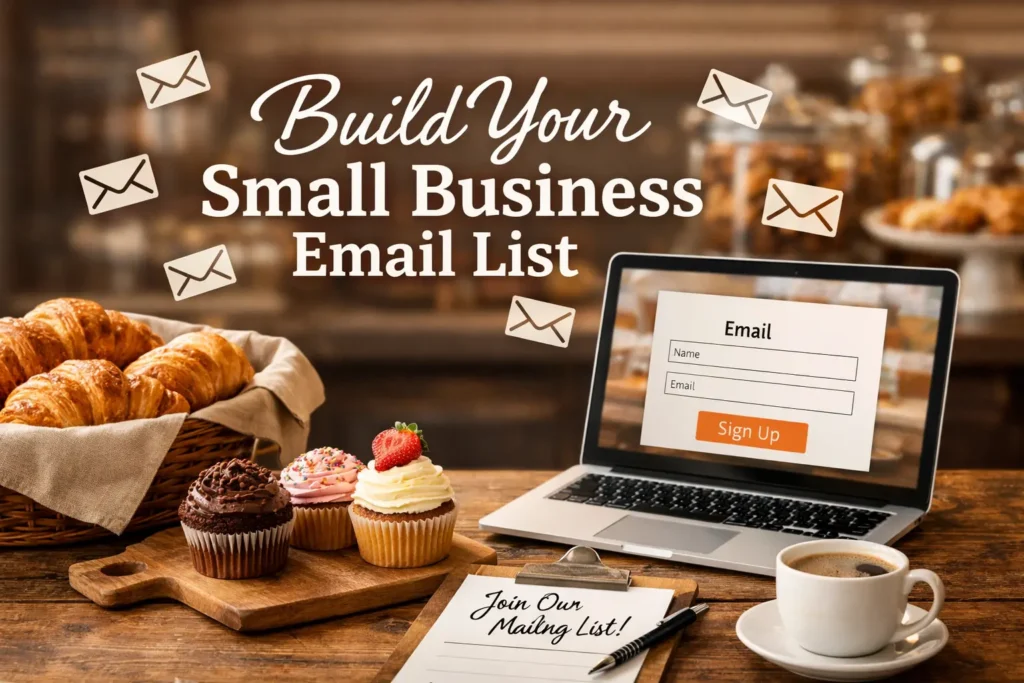
Start with tools and a simple offer. Choose an email provider like Mailchimp, ConvertKit, or Sendinblue and create a signup form that connects to a list.
Set up a clear privacy notice and welcome sequence so subscribers know what to expect and you comply with email rules.
Choose the right signup offer
Offers motivate signups. Use a discount, free guide, checklist, or exclusive early access to new products.
- Discounts: 10–20% off first order
- Guides: Short PDF with practical tips
- Exclusive content: Early access or member-only sales
Where to place signup points
Think omnipresent but tasteful. Add signup forms on your website, checkout pages, social profiles, and in-person locations.
- Website header or footer
- Pop-ups with exit intent (not intrusive)
- Social bio links with direct signup
- In-store tablet or paper signup with QR code
Build trust and collect useful data
People sign up when they trust you. Make your benefit clear and limit what you ask for. Email plus first name is often enough.
Collecting a few extra fields can help with segmentation, but balance that with conversion. Fewer fields usually means higher signups.
Segmentation basics for small businesses

Segmenting early increases relevance. Use simple tags like “new customer”, “local”, or “birthday” to personalize messages.
Example segments:
- New subscriber welcome
- Local customers for in-store events
- Past buyers for re-engagement
Automations and content that grow engagement
Set up a welcome automation to deliver the signup offer and introduce your brand. Welcome emails typically have high open rates and set subscriber expectations.
After the welcome series, use a mix of promotional and value emails. Aim for a predictable cadence so subscribers know when to expect you.
Types of emails that work
- Welcome series: 2–3 emails over the first two weeks
- Product updates and new arrivals
- Educational content or how-tos
- Limited-time offers and seasonal sales
Measure what matters
Track list growth, open rates, click-through rates, and conversion from email to sale. These metrics tell you whether your content and offers resonate.
Watch deliverability and unsubscribe rates. High unsubscribes mean you should adjust frequency or relevance.
Simple KPIs for a small business
- Monthly new subscribers
- Open rate goal: 20%+ (varies by industry)
- Click rate goal: 2–5%
- Revenue per email or per subscriber
Practical tactics to accelerate your list
Combine online and offline tactics. Use incentives strategically and test different messages to see which converts best.
- Offer a small discount at checkout for signups
- Run a social giveaway that requires email to enter
- Use QR codes in-store linked to a landing page
- Collect emails during events and import them with consent
Emails drive one of the highest returns on investment for small businesses: many see $36 for every $1 spent on email marketing when messages are well targeted.
Small real-world case study
Case: A neighborhood bakery wanted more repeat customers. They added a tablet at checkout for email signups and offered 15% off the next purchase.
Within three months they collected 600 emails. They sent a welcome series with a baking story and a new-flavor preview. Monthly email-driven sales rose 18% and foot traffic increased on weekdays.
Key wins: simple offer, in-store promotion, and a brief but engaging welcome sequence.
Common pitfalls and how to avoid them
Don’t spam. Keep frequency consistent and respect unsubscribe requests. Avoid buying lists — they damage deliverability and brand trust.
Also avoid overly long signup forms. If you need more data, collect it later in a follow-up email.
Quick checklist to launch
- Choose an email provider and set up a list
- Create a clear signup incentive
- Add forms across digital and physical touchpoints
- Set up a 2–3 email welcome automation
- Track growth and key engagement metrics
Next steps
Start small and iterate. Run one A/B test per month on subject lines or signup copy. Use results to improve your welcome sequence and offers.
With consistent effort, an email list for small business becomes a reliable channel for customer retention and predictable revenue.